When Human Intelligence Meets Artificial Intelligence: The Rise of Practical Intelligence

The conversation around technology often becomes a tug-of-war: humans vs. machines, creativity vs. automation, intuition vs. logic. But the future is not a contest—it is a collaboration.
We are now entering an era where the combination of human intelligence (HI) and artificial intelligence (AI) is giving birth to something far more valuable: practical intelligence.
Edward Thorndike already coined this term in the early 20th Century. However, none of us realized how meaningful this term would become approximately 100 years later. For Thorndike, practical intelligence meant the ability to solve everyday problems, manage situations effectively, and act adaptively in real-world contexts – so here we are, where human intelligence meets artificial intelligence and never before has this term needed so much attention!
Human Intelligence: The Spark of Meaning

Our strengths lie in:
- Creativity and imagination
- Emotional understanding and empathy
- Moral and ethical judgment
- Complex decision-making in ambiguous situations
- Lifelong learning and adaptation
These abilities allow us to dream, to feel, to question, and to create. But human intelligence has limits—time, memory, cognitive load, and biases all influence how effectively we think and work.
Artificial Intelligence: The Power of Processing
AI complements our weaknesses with abilities such as:
- High-speed data processing
- Pattern detection at massive scale
- Predictive analytics
- Automation of repetitive tasks
- 24/7 consistency and accuracy
Yet, AI is not conscious. It does not understand purpose, ethics, or meaning unless humans define them.

Artificial Intelligence: The Power of Processing

AI complements our weaknesses with abilities such as:
- High-speed data processing
- Pattern detection at massive scale
- Predictive analytics
- Automation of repetitive tasks
- 24/7 consistency and accuracy
Yet, AI is not conscious. It does not understand purpose, ethics, or meaning unless humans define them.
Where They Meet: The Emergence of Practical Intelligence

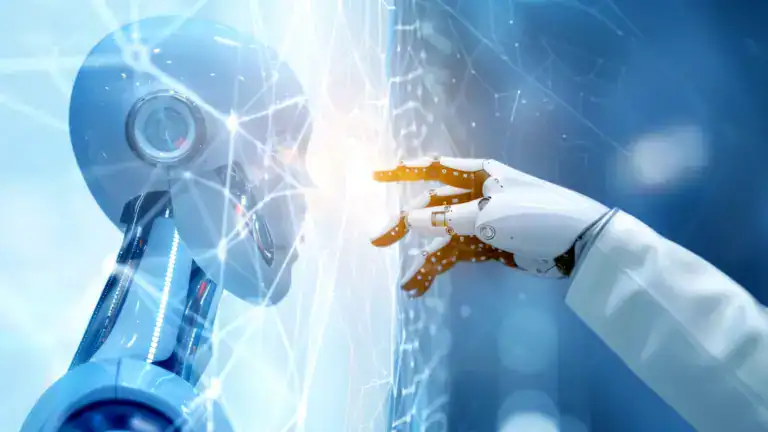
The true breakthrough happens not when AI replaces humans—but when it amplifies them. This fusion creates practical intelligence, a form of intelligence powered by: Human direction + Machine precision = Better decisions and faster progress
Examples include:
Field
Human Intelligence
AI Capability
Practical Intelligence Result
Healthcare
Diagnosis & compassion
Medical imaging & predictions
Early disease detection + empathetic care
Business
Strategy & leadership
Market analytics & automation
Smarter decisions + faster execution
Education
Mentorship & inspiration
Personalized learning systems
Tailored education for every student
Creativity
Vision & originality
Generative tools
Ideas realized faster and at scale
Why Practical Intelligence Matters

We no longer measure productivity by how hard we work, but by how intelligently we work.
Practical intelligence:
- Reduces time spent on low-value tasks
- Unlocks creativity and innovation
- Makes expertise accessible to more people
- Levels the playing field across industries
- Leads to sustainable and ethical technological growth
Instead of asking, “Will AI take our jobs?”
the question becomes, “How can AI upgrade our capability?”
We have historically done this with machines – a washing machine, dryer, dishwasher gave us back countless hours to spend time on a science project with one of our kids, or volunteering at a homeless shelter.
A Future Built on Collaboration
The most innovative organizations—and individuals—will be those who learn to:
- Use AI not just as a tool, but as a thinking partner
- Combine intuition with data
- Automate execution to make space for imagination
- Let humans set the goals while machines accelerate the journey
The future belongs to those who understand that intelligence is not a competition—it’s a shared ecosystem.


A Future Built on Collaboration
The most innovative organizations—and individuals—will be those who learn to:
- Use AI not just as a tool, but as a thinking partner
- Combine intuition with data
- Automate execution to make space for imagination
- Let humans set the goals while machines accelerate the journey
The future belongs to those who understand that intelligence is not a competition—it’s a shared ecosystem.
Where They Meet: The Emergence of Practical Intelligence
When HI + AI = Practical Intelligence, we don’t lose our humanity—we enhance it.
We gain more time to think, innovate, and connect. We build solutions that are scalable, sustainable, and meaningful. bThe world does not need more human intelligence alone or artificial intelligence alone. It needs the harmony of both—the intelligence of purpose and the intelligence of possibility.
Let’s talk about how human-centered change can support your organization.